Book of Lancelot
The Book of Lancelot is the medieval romance that, within Dante Alighieri's Inferno, becomes the immediate instrument of Paolo and Francesca's fatal transgression. It is not merely a book they read but the very occasion of their sin, the text that, by recounting the love of Lancelot and Guinevere, mirrors and precipitates their own adulterous kiss. In Dante's hands, the romance functions as a complex narrative device: a story-within-a-story that reveals the power of art to shape desire, a moral warning about the dangers of uncritical reading, and a key piece of evidence in Francesca's self-justifying testimony. The book's presence in the second circle of Hell, where the lustful are eternally swept by a tempest, transforms a courtly entertainment into an object of damnation, making it one of the most famous and debated literary artifacts in the Western canon.
Identity and Nature of the Book
The Book of Lancelot is a medieval romance, part of the Arthurian cycle, that recounts the adulterous love between Sir Lancelot and Queen Guinevere. In the Inferno, it is not described by its physical appearance but by its content and its effect. Francesca refers to it as the story "of Launcelot, how Love did him enthral" , indicating that the narrative focuses on the knight's passionate surrender to love. The book is also called "Galeotto" by Francesca , a name that carries a double meaning: it is the Italian name of Gallehault, the character in the romance who acts as a go-between for Lancelot and Guinevere, and it also becomes a term for a pander or procurer. This naming transforms the book from a passive object into an active agent in the seduction.
The Reading Scene and Its Consequences
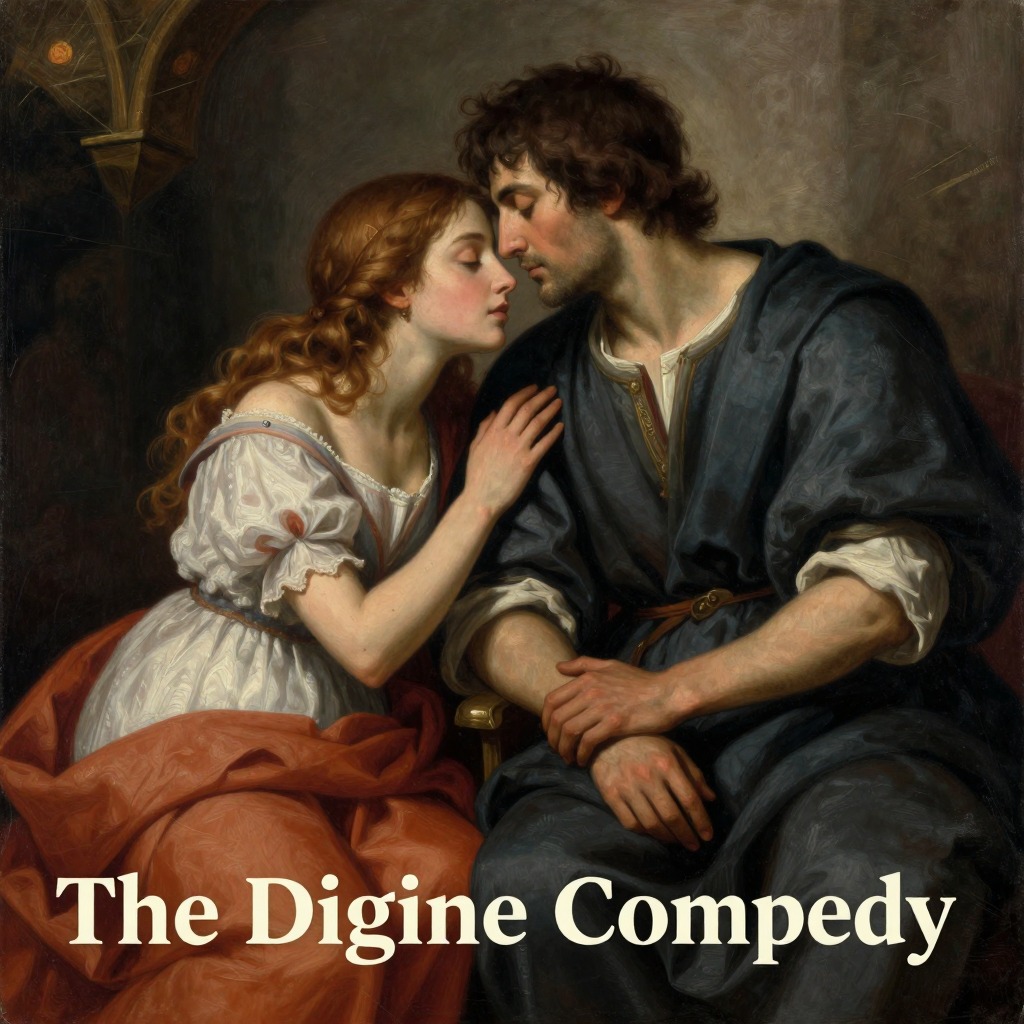
The crucial scene unfolds in the second circle of Hell, where Dante, moved by pity, asks Francesca to explain how love led her and Paolo to their doom. She recounts that they were reading the Book of Lancelot together "for our delight" , alone and without any fear . The reading had a powerful physical effect on them: "Full many a time our eyes together drew / That reading, and drove the colour from our faces" (E00907-E00908). The decisive moment came when they read of the knight kissing the "much-longed-for smile" of his lady (E00910-E00911). At that point, Paolo, "who ne'er from me shall be divided, / Kissed me upon the mouth all palpitating" (E00912-E00913). Francesca then declares, "Galeotto was the book and he who wrote it" , explicitly naming the book as the go-between that facilitated their sin. She concludes, "That day no farther did we read therein" , marking the book as the boundary between their innocent past and their fatal fall.
Narrative and Thematic Significance
The Book of Lancelot operates on multiple levels within Dante's poem. It is a literal object that triggers a real-world event, but it is also a symbol of the seductive power of art. Francesca's account is a masterful piece of rhetoric that blames the book for her actions, a claim that Dante the poet implicitly critiques by placing her in Hell for her own free choice. The book thus becomes a test case for the ethics of reading: it can inspire noble love or lead to damnation, depending on the reader's disposition. Furthermore, the romance serves as a mirror for the Commedia itself, as Dante's poem also tells stories of love and desire, but with the explicit aim of leading readers to salvation rather than perdition. The Book of Lancelot, by its very presence in Hell, warns against the kind of literature that glorifies passion without moral restraint, a contrast to Dante's own divinely inspired work.
Connection to the Poem's Structure
The episode of Paolo and Francesca is the first major encounter with a named sinner in the Inferno, and the Book of Lancelot is central to its impact. The book's role as a "Galeotto" echoes the larger theme of mediation and temptation that runs through the poem. Just as Virgil serves as Dante's guide through Hell, the book serves as a false guide for Paolo and Francesca, leading them not to understanding but to destruction. The romance also introduces the concept of contrapasso, the law of symbolic retribution: the lovers, who were swept away by passion in life, are now eternally swept by the infernal hurricane. The book, which once stirred their desires, is now absent, leaving them only with the memory of their sin and the endless torment of the wind. In this way, the Book of Lancelot is not just a prop but a foundational element of one of the Commedia's most poignant and morally complex episodes.